
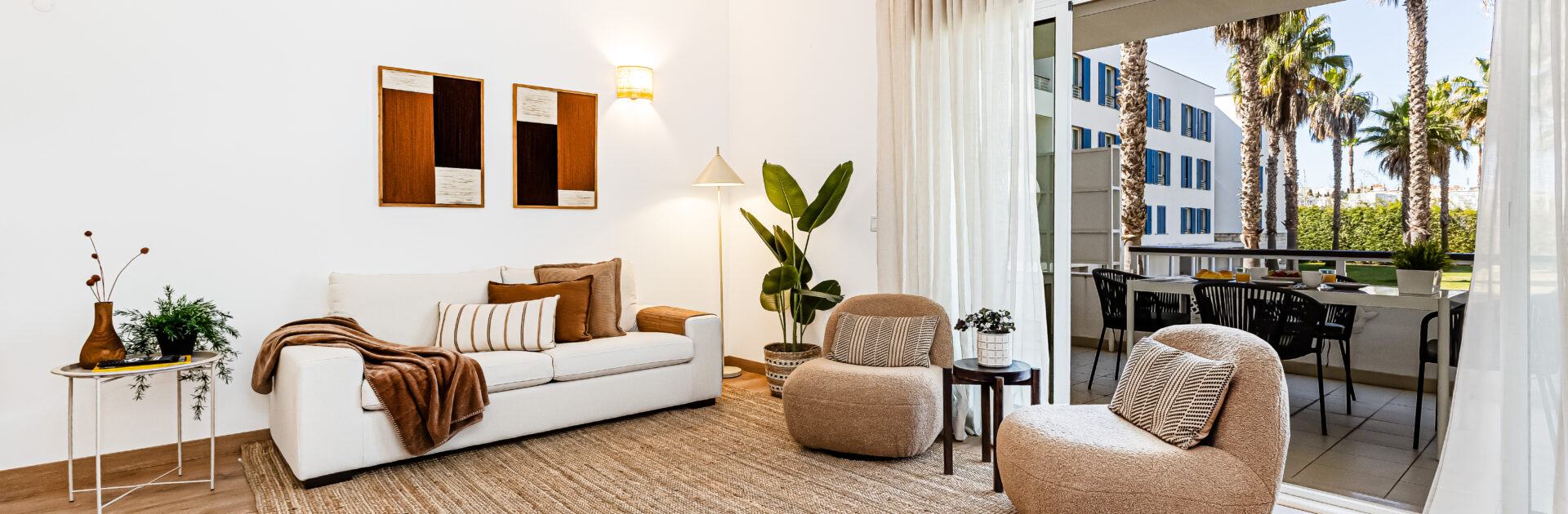
In recent years, Local Accommodation (AL) has established itself as one of the most attractive ways to generate income from real estate in Portugal. However, starting an AL involves much more than simply creating a listing on Airbnb or Booking.com.
There are several legal, tax, and operational obligations that must be fulfilled to ensure the business operates legally and professionally.
In this article, we have gathered, in a simple and practical way, everything you need to know about opening a Local Accommodation business in Portugal in 2026.
What is considered Local Accomodation?
In Portugal, Local Accommodation refers to any property that provides temporary paid accommodation to tourists, without being classified as a hotel or tourist resort.
AL properties may take different forms:
- apartment;
- villa or house;
- guesthouse;
- rooms;
- hostel.
In practice, most properties advertised on platforms such as Airbnb or Booking.com fall under this regime.
1. Register the Local Accommodation
Before receiving guests, the property must be registered with the RNAL – National Register of Local Accommodation.
This process is completed online through the Balcão Único Eletrónico (Single Electronic Desk), by submitting a prior communication to the City Council responsible for the area where the property is located.
After submission, a registration number is issued, which must appear in all advertisements and online platforms.
Without this number, the accommodation is considered illegal.
2. Check the municipality’s rules
Not all municipalities allow new AL registrations without restrictions.
Some cities have:
- containment zones;
- limits per parish;
- specific condominium rules;
- mandatory tourist taxes.
Before proceeding, it is essential to confirm the local rules applicable to the property.
3. Comply with mandatory requirements
All Local Accommodation properties must meet minimum safety and operational requirements.
Mandatory items include:
- fire extinguisher;
- fire blanket;
- first aid kit;
- visible emergency number (112);
- mandatory signage, including noise regulations and condominium rules;
- physical and electronic complaints book.
In addition, the property must maintain good standards of hygiene, maintenance, and overall condition.
4. Reporting foreign guests
One obligation often overlooked by new owners is the reporting of foreign guest information to the Portuguese authorities.
This registration is done through the SIBA platform (formerly the SEF system) and includes information such as:
- name;
- nationality;
- identification document;
- stay dates.
Failure to comply with this obligation may result in significant fines.
5. Tax obligations
Anyone operating a Local Accommodation business is also responsible for handling the tax side of the activity.
Typically, this includes:
- registering the business activity;
- choosing the appropriate tax regime;
- issuing invoices;
- declaring income.
The tax framework may vary depending on:
- annual revenue;
- number of properties;
- additional services provided.
For this reason, it is highly recommended to work with an accountant familiar with the Local Accommodation sector.
6. Managing an AL goes beyond bureaucracy
Complying with the law is only part of the process.
A well-managed Local Accommodation business also requires:
- efficient communication with guests;
- organized check-ins;
- professional cleaning;
- reservation management;
- ongoing maintenance;
- compliance with condominium regulations and noise laws.
Today, the guest experience has a direct impact on reviews, property profitability, and listing rankings across different platforms.
Conclusion
Opening a Local Accommodation business in Portugal has become a more demanding and regulated process, but it still represents an excellent opportunity for those looking to profit from property in a professional and sustainable way.
The most important thing is ensuring that everything is handled correctly from the very beginning:
- verifying the property’s eligibility;
- complying with legal and tax obligations;
- ensuring safety requirements are met;
- preparing an efficient and professional operation.
More than simply following regulations, a well-structured AL builds guest trust, improves online reputation, and increases the property’s profitability potential.
At Algarve Golden Properties, we support property owners through every stage of the process — from registration and property preparation to full accommodation management.
If you are thinking about opening a Local Accommodation business, or if you want to improve the profitability and management of your property, our team can help simplify the entire process and ensure an operation fully adapted to the demands of today’s market.
Because the success of a Local Accommodation business starts long before the first check-in.